Sale!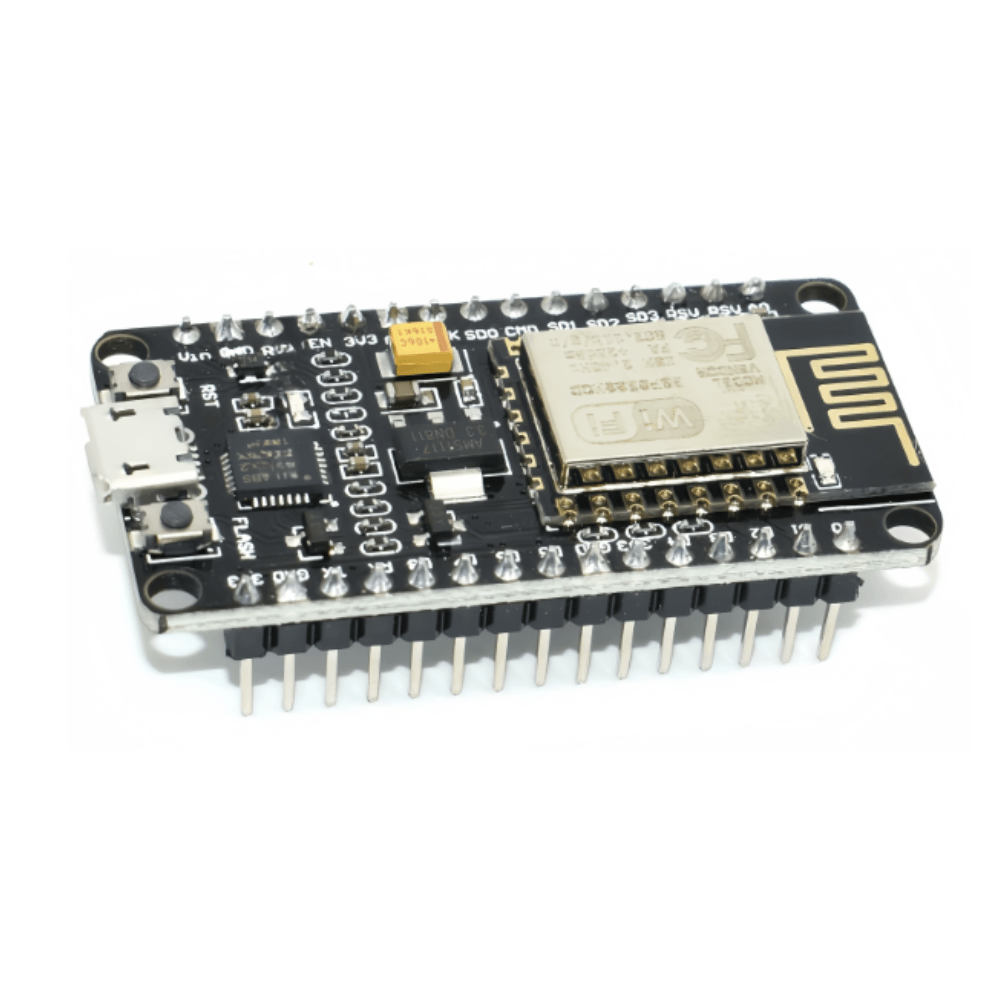
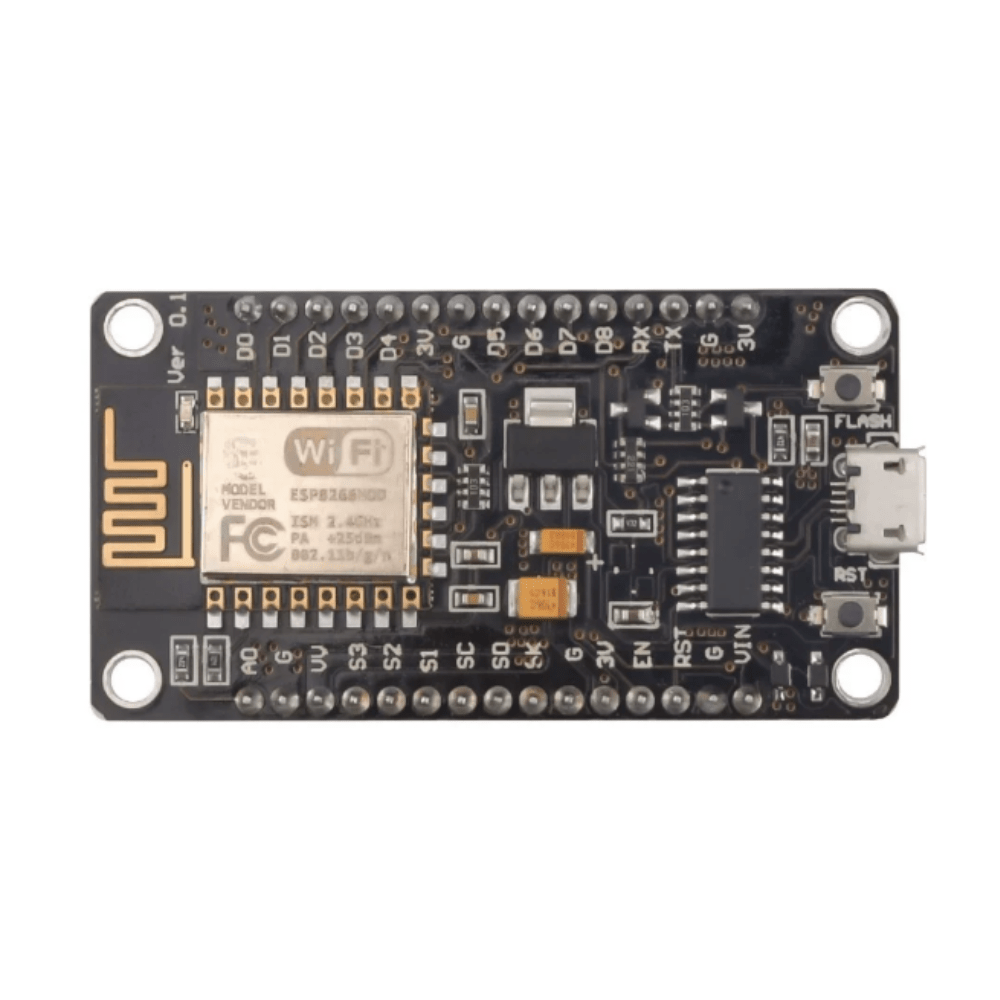
Efficient ESP8266 WiFi Development Board NodeMCU V2 CP2102 Micro USB & USB Type-C
$ 2.45
Description ESP8266 WiFi Development Board with CP2102 USB Interface The ESP8266 WiFi Development Board is an open-source IoT development board built around the ESP8266EX processor and ESP-12E module. Equipped with the reliable CP2102 USB-to-Serial converter, it provides stable USB communication and easy programming on Windows, macOS, and Linux. Choose between Micro USB or USB Type-C versions according to your project requirements. Both variants offer identical performance, making them excellent choices for Arduino development, ESPHome devices, MQTT applications, smart home automation, wireless sensors, and cloud-connected embedded systems. ESP8266 WiFi Development Board Features ESP8266EX 32-bit WiFi MCU ESP-12E wireless module CP2102 USB-to-UART converter Available in Micro USB and USB Type-C versions 802.11 b/g/n WiFi 4MB Flash Memory 80MHz CPU (up to 160MHz supported) Breadboard-friendly design Auto Reset & Auto Program Circuit Supports Arduino IDE, Lua, PlatformIO and ESPHome Integrated PCB Antenna Low power operation Stable USB communication Multiple GPIO interfaces Ideal for IoT development and rapid prototyping ESP8266 WiFi Development Board Specifications Item Specification Product ESP8266 WiFi Development Board Module ESP-12E MCU ESP8266EX USB Interface CP2102 USB Connector Micro USB / USB Type-C WiFi Standard IEEE 802.11 b/g/n Operating Voltage 3.3V Input Voltage 5V USB CPU Frequency 80MHz (up to 160MHz) Flash Memory 4MB SRAM 64KB Digital GPIO 11 Analog Input 1 (10-bit ADC) Communication UART / SPI / I2C / PWM Antenna PCB Antenna Programming Arduino IDE / Lua / PlatformIO Wireless Mode STA / AP / STA AP Dimensions Approx. 49 × 26 mm Applications This ESP8266 WiFi Development Board is suitable for: Smart Home Automation ESPHome Projects Home Assistant Devices Wireless Sensor Networks IoT Gateway Remote Monitoring Arduino Learning Robotics MQTT Applications Cloud Data Collection DIY Electronics Embedded Development Package Includes 1 × ESP8266 WiFi Development Board USB cable not included FAQ Q1: What is the difference between the Micro USB and USB Type-C versions? The only difference is the USB connector. Both versions use the same ESP8266EX processor, CP2102 USB interface, and offer identical performance. Q2: Does this board use the CP2102 USB chip? Yes. It features the genuine CP2102 USB-to-UART bridge for reliable programming and serial communication. Q3: Is this board compatible with Arduino IDE? Yes. It is fully compatible with Arduino IDE after installing the ESP8266 board package. Q4: Can I use this board with ESPHome? Yes. It works perfectly with ESPHome and Home Assistant projects. Q5: Is Lua firmware supported? Yes. The board supports NodeMCU Lua firmware as well as Arduino IDE and PlatformIO. Related Products You may also be interested in: ESP32 Development Boards Arduino UNO R3 Relay Modules Breadboards Dupont Jumper Wires OLED Display Modules DHT11 & DHT22 Sensors Learn More For more information regarding ESP8266 WiFi Development Board, click here to view the tutorial video.